Behavior management techniques Cognitive and behavioral Occupational Therapy in Nakodar
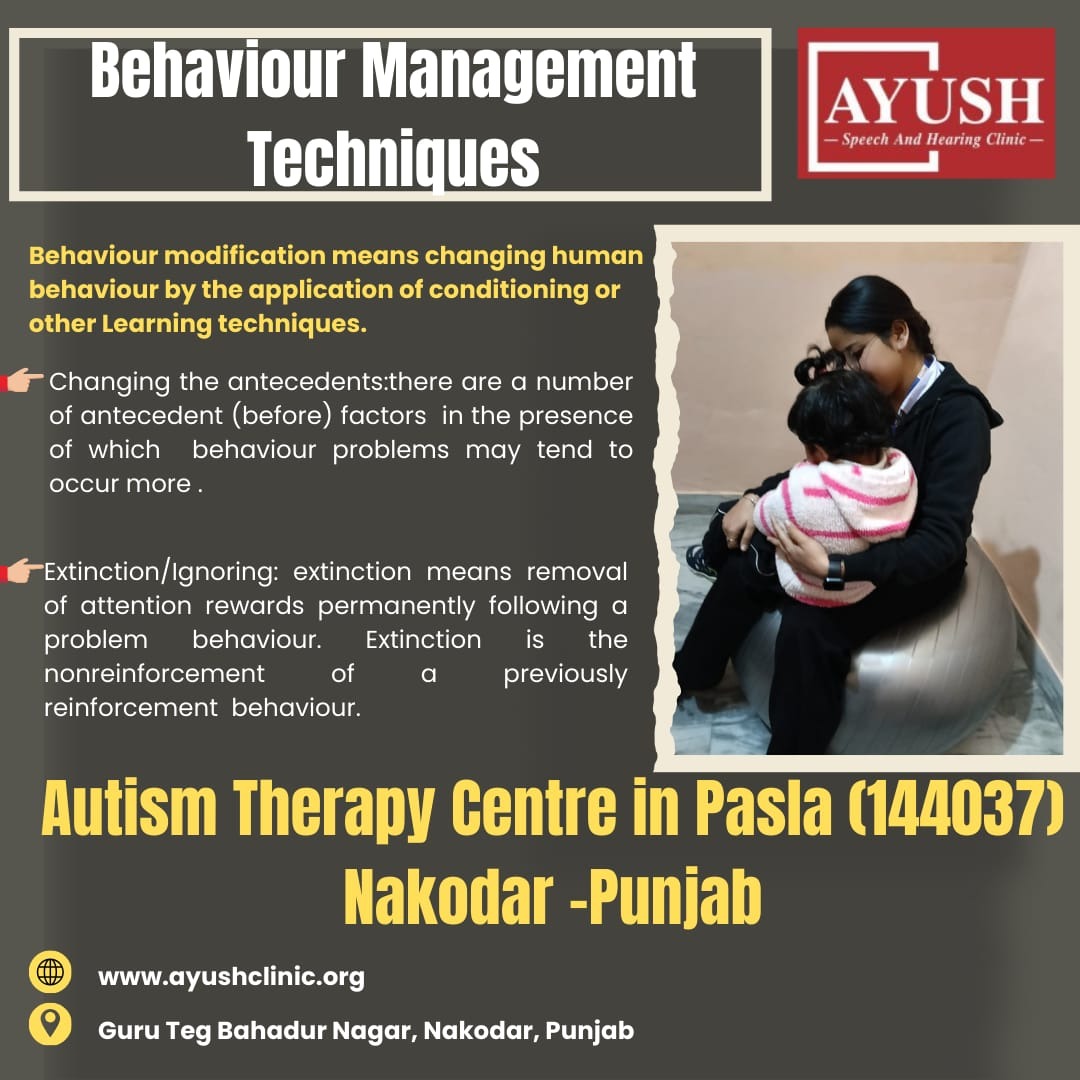
Behavior modification means changing human behavior by the application of conditioning or other Learning techniques.
Steps involved in behavior management program (BMP)
1. identification of problem behaviors
2. statement of problem behaviors
3. selection of problem behaviors
4. identification of rewards
5. recording baseline of the problem behaviors
6. Functional analysis of the problem behaviors
7. development and implementation of behavior management programs
8. evaluation of behavior management programs
Behavior techniques in managing problem behaviors Speech Therapy Centre in Near me
2.Extinction/Ignoring: extinction means the removal of attention rewards permanently following a problem behavior. Extinction is the nonreinforcement of a previously reinforced behavior.
3.out time: time out Matheran includes removing the child from the rewards or the from the child. For a particular period following a problem behavior ensure that rewards or a rewarding situation is removed following the problem behavior.
Type of time-out
Remove the child to an area in class
Remove the reward activity materials
Place the child outside
Head down position
Seclude the child in an isolated room.
4. Physical restraint: physical restraint involves restricting the physical movements of the child for some time following a problem behavior.
5. Response cost: another way of decreasing problem behaviors in children is to take away the reward that the child has earned by performing specific good behaviors.
6. overcorrection
the use of this technique will not only decrease problem behaviors in children but also teach appropriate ways of behaving. When this technique is implemented, after the occurrence of a problem behavior the child is required to restore the disturbed situation to a state that is much better than
what it was before the occurrence of the problem behavior.
Restitutional over-correction requires the student to correct the efforts of his/her Misbehaviour by restoring the environment to better than its original condition.
positive correction requires the student to practice appropriate behavior an abundant number of times.
conveying Displeasure: we use This technique the teacher is required to give clear verbal commands expressing displeasure to a child following the occurrence of specific problem behaviors.
Differential Rewards:
Differential rewards of opposite behavior
Differential rewards of other behavior
Differential rewards of low-rate behavior
Differential rewards of an alternate behavior
Self-management Techniques
1. self-observation
2. self-recording techniques
3. Self cueing techniques
4. Self-reward techniques
5. Correspondence training
6. Anger control technique
Occupational Therapy in Pasla Punjab