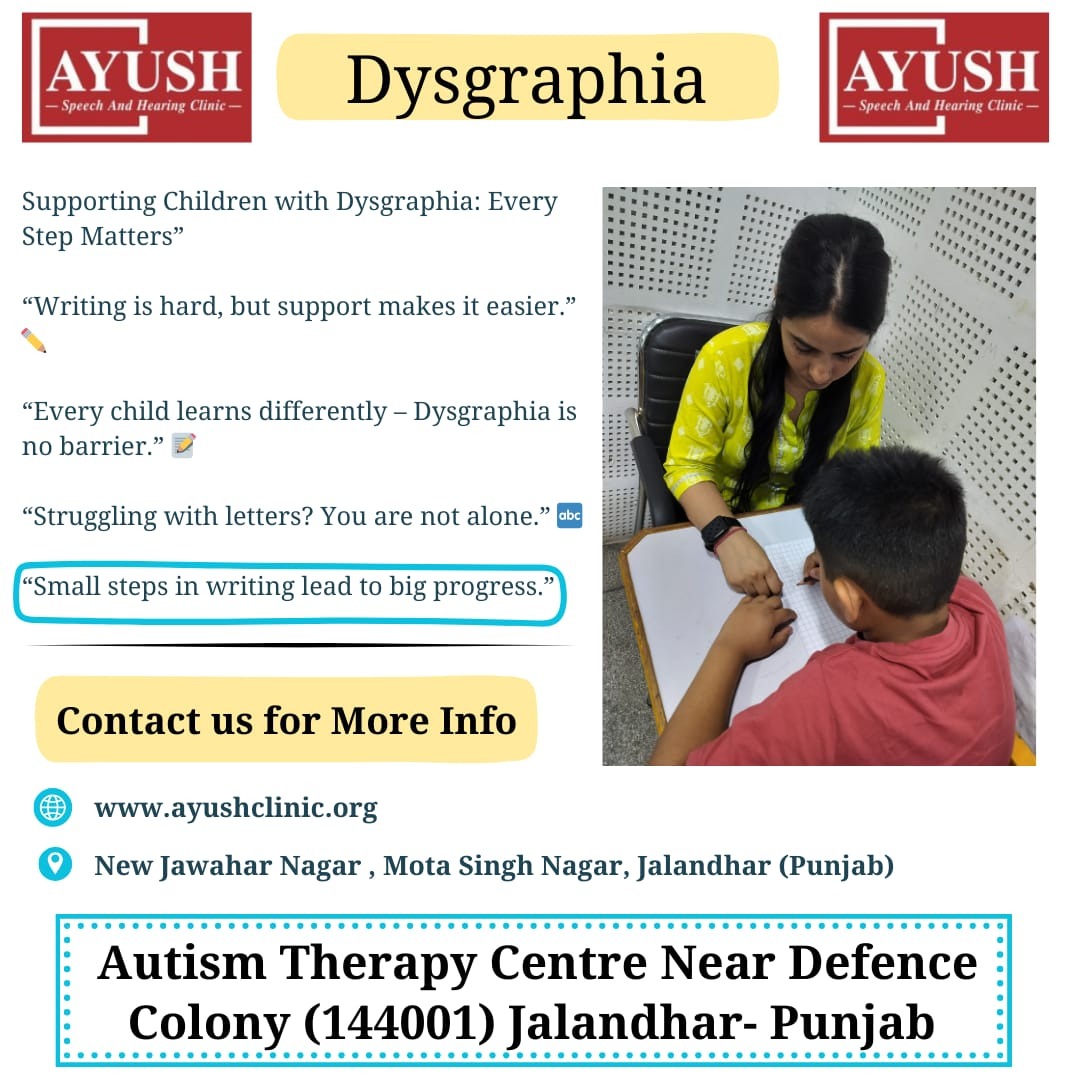
Dysgraphia: Understanding the Learning Disability That Affects Writing Skills
Dysgraphia Treatment in Jalandhar | Learning Disability
Support
Writing disorder in children
Dysgraphia symptoms and causes
Occupational therapy for dysgraphia
Introduction
Every child learns differently, but sometimes difficulties in learning are more than just a phase. One such challenge is Dysgraphia—a neurological learning disability that affects writing ability. Children with Dysgraphia often struggle with handwriting, spelling, organizing thoughts on paper, and producing written work. Early awareness and the right support can make a big difference in their academic and personal growth.
What is Dysgraphia?
Dysgraphia is a specific learning disability that impacts a person’s ability to write clearly and coherently. It is not linked to intelligence; in fact, many children with Dysgraphia are brilliant and creative. The problem lies in the brain’s ability to process and coordinate the skills needed for writing—like motor skills, memory, and language processing.
Signs and Symptoms of Dysgraphia
Recognizing the signs early is crucial for timely support. Some common symptoms include:
-
Poor handwriting (illegible, inconsistent size or spacing of letters)
-
Difficulty in spelling simple and complex words
-
Problems with grammar and punctuation while writing
-
Struggles with organizing ideas on paper despite knowing the concepts
-
Slow writing speed compared to peers
-
Avoidance of writing tasks due to frustration or fatigue
-
Frequent erasing or crossing out words
Parents and teachers may first notice these symptoms when the child starts school and is expected to write regularly.
Causes of Dysgraphia
The exact cause of Dysgraphia isn’t fully understood, but several factors may contribute:
-
Neurological differences affecting fine motor skills and language processing
-
Developmental delays in writing-related brain functions
-
Genetic factors (family history of learning disabilities)
-
Associated conditions like ADHD, Dyslexia, or other learning disorders
Types of Dysgraphia
Experts classify Dysgraphia into different types based on the underlying difficulty:
-
Motor Dysgraphia – Trouble with fine motor skills, making handwriting physically difficult.
-
Spatial Dysgraphia – Difficulty in understanding spacing, leading to uneven or disorganized writing.
-
Dyslexic Dysgraphia – Strong spelling and reading difficulties alongside poor handwriting.
How Dysgraphia Affects a Child’s Life
Dysgraphia doesn’t just impact academics—it can also affect self-esteem and confidence. Children may feel “less smart” compared to peers, avoid classroom participation, or develop anxiety related to schoolwork. Without support, these struggles may continue into adolescence and adulthood, affecting higher education and career opportunities.
Diagnosis of Dysgraphia
Early diagnosis is essential. A professional assessment usually involves:
-
Educational and psychological testing
-
Observation of handwriting samples
-
Evaluation of fine motor skills
-
Language and cognitive assessments
Parents should consult speech therapists, occupational therapists, or special educators if they notice persistent writing difficulties.
Early signs of dysgraphia in children
How to diagnose dysgraphia in students
Teaching strategies for children with dysgraphia
Treatment and Support Strategies for Dysgraphia
While Dysgraphia cannot be “cured,” effective interventions can help children cope successfully.
1. Occupational Therapy
Helps children improve fine motor skills, hand strength, and coordination.
2. Speech and Language Therapy
Assists in language processing, spelling, and expression skills.
3. Special Education Support
Teachers can provide modified assignments, extra time, or alternative ways of completing tasks.
4. Remedial Teaching Techniques
Using multi-sensory approaches (visual, auditory, and kinesthetic) to make learning engaging and effective.
5. Assistive Technology
-
Speech-to-text software
-
Typing instead of handwriting
-
Digital note-taking tools
6. Parental Support
Encouragement, patience, and positive reinforcement at home are key to boosting a child’s confidence.
Tips for Parents and Teachers
-
Break down writing tasks into smaller steps
-
Encourage the use of technology for note-taking
-
Focus on content, not just handwriting
-
Give extra time for written assignments
-
Celebrate small improvements to keep motivation high
FAQs about Dysgraphia
1. Is Dysgraphia the same as Dyslexia?
No. Dyslexia affects reading and language processing, while Dysgraphia specifically impacts writing skills. However, both can co-exist.
2. Can a child outgrow Dysgraphia?
Dysgraphia is lifelong, but with therapy and support, children can learn to manage and succeed academically.
3. Who can diagnose Dysgraphia?
Psychologists, occupational therapists, and special educators can assess and diagnose Dysgraphia.
4. How can schools support children with Dysgraphia?
By offering accommodations like extra time, reduced handwriting tasks, and providing alternative ways to demonstrate knowledge
Dysgraphia therapy in Jalandhar
Speech and occupational
therapy in Jalandhar
Best clinic for
learning disabilities in Jalandhar
Conclusion
Dysgraphia may be a challenging learning disability, but it does not define a child’s potential. With early identification, therapeutic support, and parental encouragement, children with Dysgraphia can thrive academically and emotionally. At Ayush Speech and Hearing Clinic, we believe every child deserves the right guidance to express their abilities fully—because learning differently is not a weakness, it’s just another way of being smart.