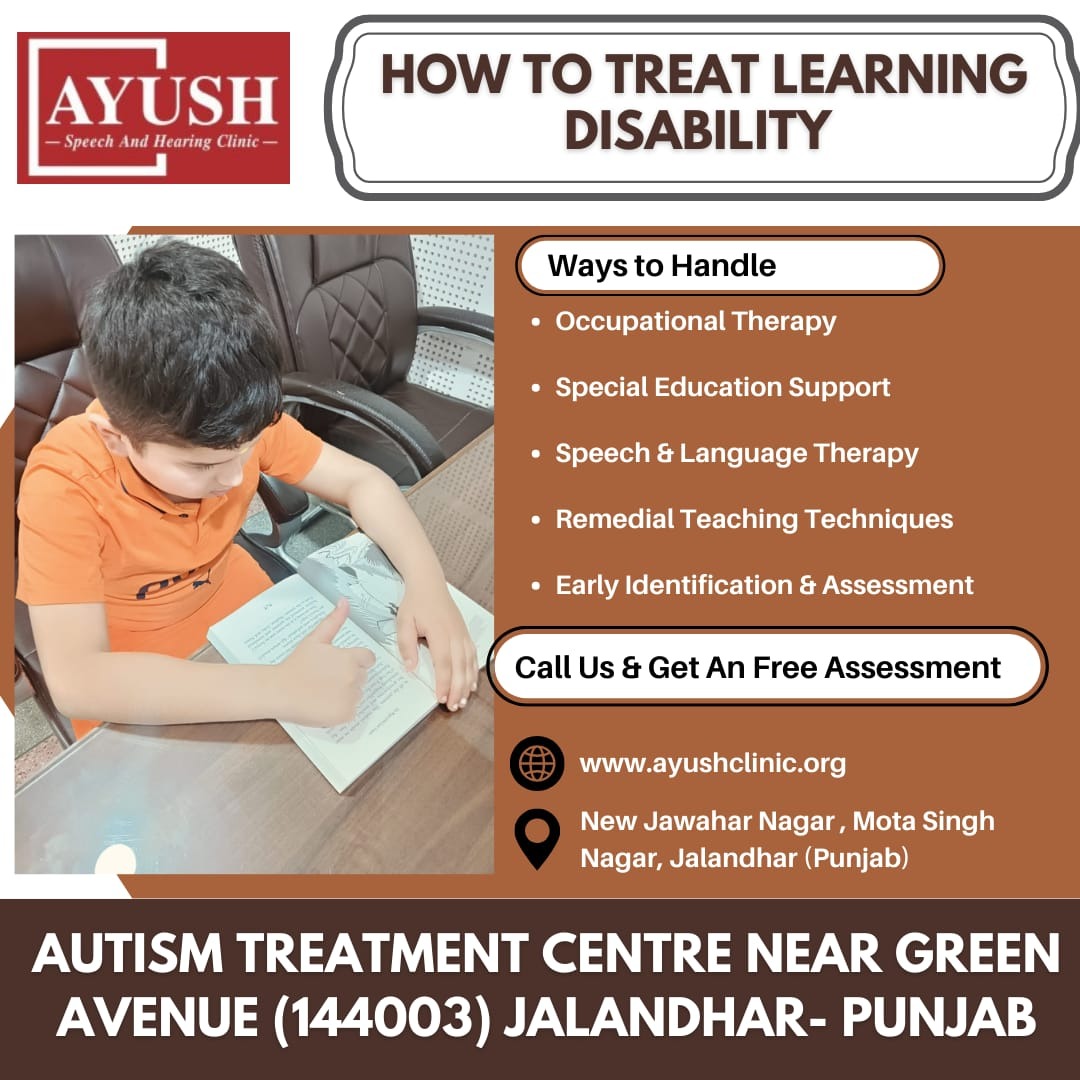
Learning Disabilities (LD): Types, Symptoms, and Support Strategies
Auditory processing disorder helps Jalandhar
What is Learning Disability (LD)?
A Learning Disability (LD) is a neurological condition that affects how a person understands, processes, and retains information. It can make certain academic skills—such as reading, writing, listening, speaking, or mathematics—more challenging.
It is important to note that learning disabilities are not linked to intelligence. Many individuals with LDs have average or above-average intelligence, but they may need the right strategies, tools, and support to succeed.
Skills Commonly Affected by Learning Disabilities
-
Reading – Dyslexia
-
Writing – Dysgraphia
-
Listening & Processing – Auditory Processing Disorder (APD)
-
Mathematics – Dyscalculia
What Learning Disabilities Are Not Caused By
-
Lack of intelligence: People with LDs can be highly intelligent.
-
Poor teaching: Learning disabilities are not the result of inadequate instruction.
-
Lack of motivation: Individuals may simply require extra support, accommodations, or tools to learn effectively.
Common Characteristics of Learning Disabilities
-
Difficulty with specific skills: Struggles with reading, writing, or solving math problems.
-
Frustration and emotional challenges: Feelings of stress, anxiety, or discouragement due to learning struggles.
-
Inconsistent performance: Excelling in some areas while facing difficulties in others.
Support and Accommodations
-
Individualised Education Plans (IEPs): Tailored learning strategies designed to meet unique needs.
-
Assistive Technology: Tools such as speech-to-text software, audiobooks, or organizational apps.
-
Classroom Accommodations: Adjustments in instruction or learning environment to support individual needs.
Types of Learning Disabilities
1. Primary Types
-
Dyslexia: Affects reading, spelling, and comprehension. Individuals may struggle with reading fluency, recognizing words, and retaining information.
-
Dyscalculia impacts mathematical skills, including number sense, calculations, understanding money, and time concepts.
-
Dysgraphia: Affects writing skills, spelling, and handwriting. Individuals may have trouble organizing thoughts on paper and clearly expressing ideas.
2. Sensory Processing Disabilities
-
Auditory Processing Disorder (APD): Difficulty in processing spoken information, following instructions, or distinguishing between similar sounds.
-
Visual Processing Disorder (VPD): Trouble interpreting visual input, which can affect reading, writing, and mathematics.
3. Other Learning Disabilities
-
Nonverbal Learning Disability (NVLD): Challenges with social skills, body language, and spatial awareness.
-
Language Processing Disorder: Difficulties with expressive and receptive language, such as finding the right words or understanding spoken language.
-
Attention Deficit Hyperactivity Disorder (ADHD): While not always categorized as an LD, ADHD can significantly affect focus, self-control, and academic performance.