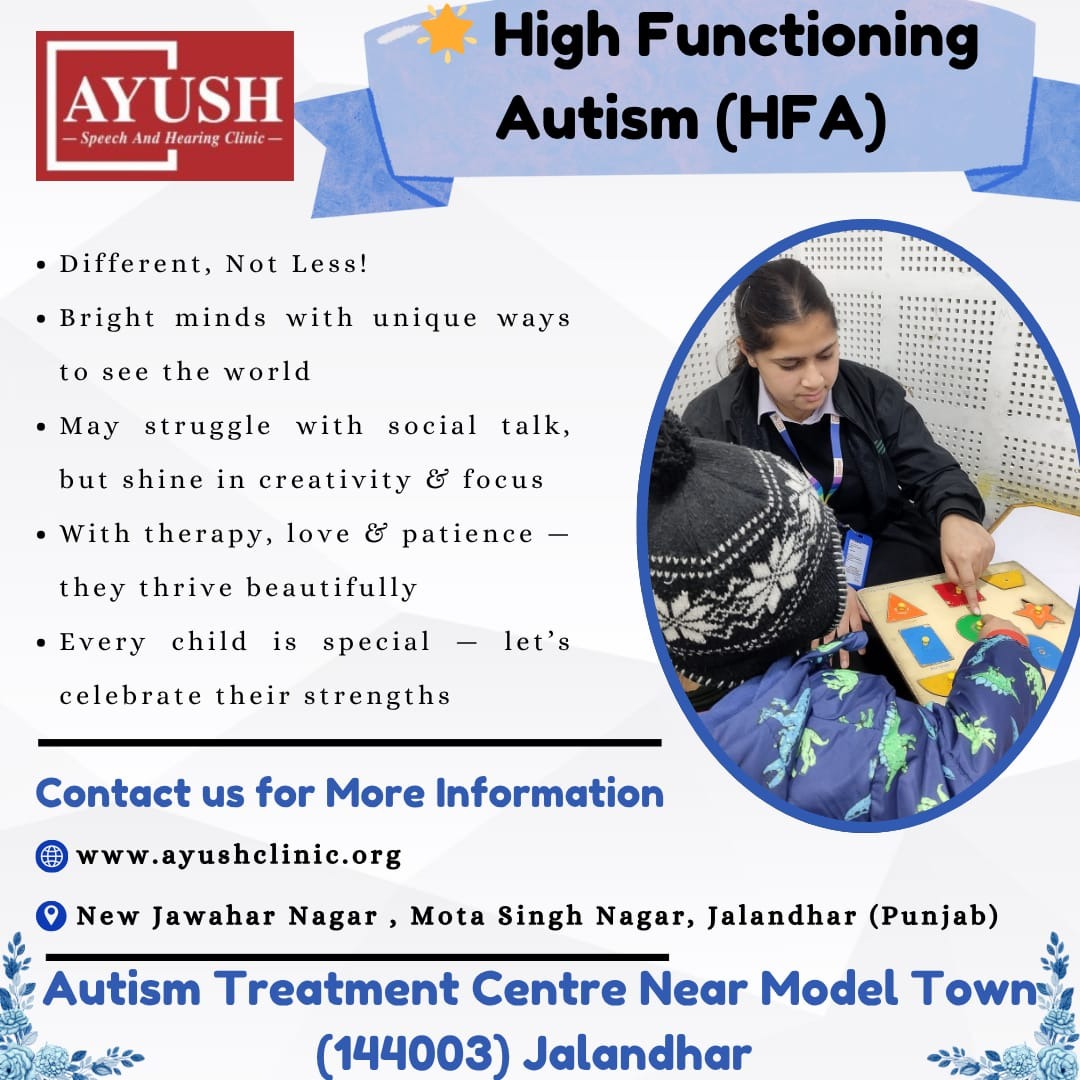
What is HFA?
Characteristics of HFA
- Sensory
Sensitivity: Hyper or hyposensitivity to certain sensory stimuli
such as smells, tastes, sounds, lights, or textures.
- Communication
Challenges: Difficulty with verbal and nonverbal communication,
understanding humor, and interpreting nuances of language.
- Social
Interaction Challenges: Trouble understanding
social cues, engaging in reciprocal conversations, and maintaining eye
contact.
- Restricted
and Repetitive Behaviour: Extreme interest in
repetitive movements, specific topics, or objects, and resistance to
change.
- Executive
Functioning Challenges: Difficulty with
planning, organizing, and completing tasks.
How to Fix HFA?
HFA is not something that needs to be "fixed."
Individuals with HFA often benefit from accommodations and support that
help them overcome the challenges they face.
Strategies for Support
- Social
Skill Training: Teaching social skills such as maintaining
conversations can help individuals with HFA improve relationships.
- Cognitive
Behavioural Therapy (CBT): Helps manage emotional
challenges, anxiety, and stress.
- Self-Advocacy:
Encouraging self-awareness and advocacy for academic and personal success.
- Supportive
Relationships: Building strong connections with family, friends,
and professionals promotes confidence and understanding.
Focus on Acceptance and
Inclusion
- Inclusion:
Creating inclusive environments that value individuals with HFA helps them
feel confident and comfortable.
- Acceptance:
Accepting individuals with HFA as they are promotes positive self-esteem
and identity.
- Awareness
and Education: Spreading awareness about HFA reduces stigma and
encourages understanding.
Individualized Approach
- Personalized
Support: Providing individual-specific support to address
challenges effectively.
- Collaboration:
Working together with family and professionals ensures that strategies
meet specific needs.
Symptoms of HFA
HFA is characterized by a range of symptoms that vary in
severity.
Some common symptoms include:
Social Communication
Challenges:
- Difficulty
initiating or maintaining conversations.
- Trouble
understanding idioms, sarcasm, or nonverbal cues.
- Literal
interpretation of language leading to misunderstandings.
Repetitive Behaviour and
Interests:
- Routine
and Rituals: Preference for routine and distress when disrupted.
- Repetitive
Movements: Rocking, hand flapping, especially during
excitement or stress.
- Intense
Interests: Deep focus on specific topics or hobbies.
Sensory Sensitivity:
- Hypersensitivity:
Over-responsiveness to strong smells, loud noises, or bright lights.
- Hyposensitivity:
Under-responsiveness, seeking intense sensory experiences.
Causes and Treatment of HFA
HFA is a neurodevelopmental disorder that affects
communication, social interaction, and behavior.
Though there is no cure, various therapies can help manage symptoms and improve
quality of life.
Causes of HFA:
- Environmental
Factors: Exposure to certain infections or conditions during
pregnancy may contribute.
- Genetic
Factors: Genetic mutations and variations play a key role in
development.
Treatment Options for HFA
- Applied
Behavioural Analysis (ABA): Improves adaptive
behavior, communication, and social skills.
- Cognitive
Behavioural Therapy (CBT): Helps manage anxiety and
emotional difficulties.
- Social
Skills Training: Develops communication and interaction abilities.
- Occupational
Therapy (OT): Builds independence, daily living skills, and
sensory integration.
- Speech and Language Therapy: Enhances language, speech clarity, and social communication
- HFA
Treatment in Jalandhar
- Autism
Support Services Jalandhar
- Cognitive
Behavioural Therapy for Autism in Jalandhar
- Speech
Therapy for Autism in Jalandhar
- Best
Autism Clinic in Jalandhar
- Behavioural
Therapy for HFA in Jalandhar