Why autism children face difficulty in following commands?
With growing advance generation today\'s current children are also smart with higher IQ level. They know what to do, why to do, how to do, when to do and if guided properly then they become perfect in any particular task.
Any type of command whether it is 1 word or 2 words command or 3 words or 4 words or 5 words command or a full lengthy sentences they understand what the speaker is trying to say and what they have to do.
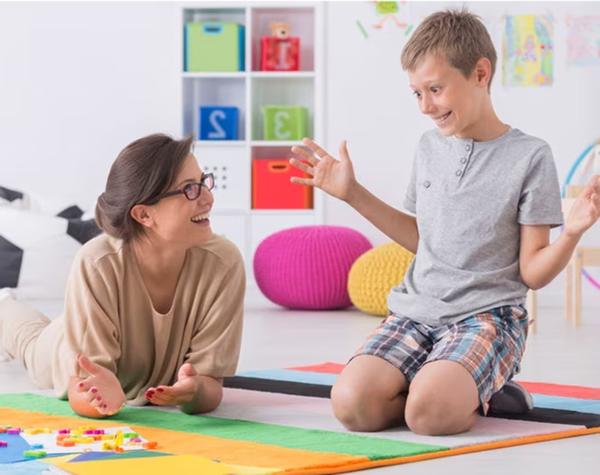
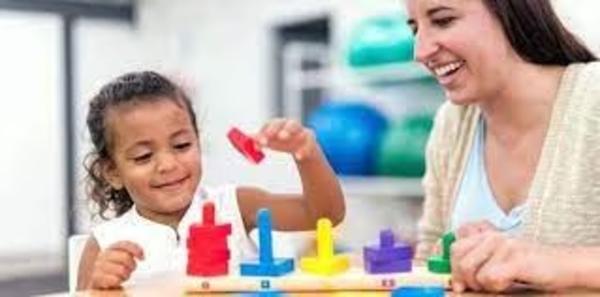
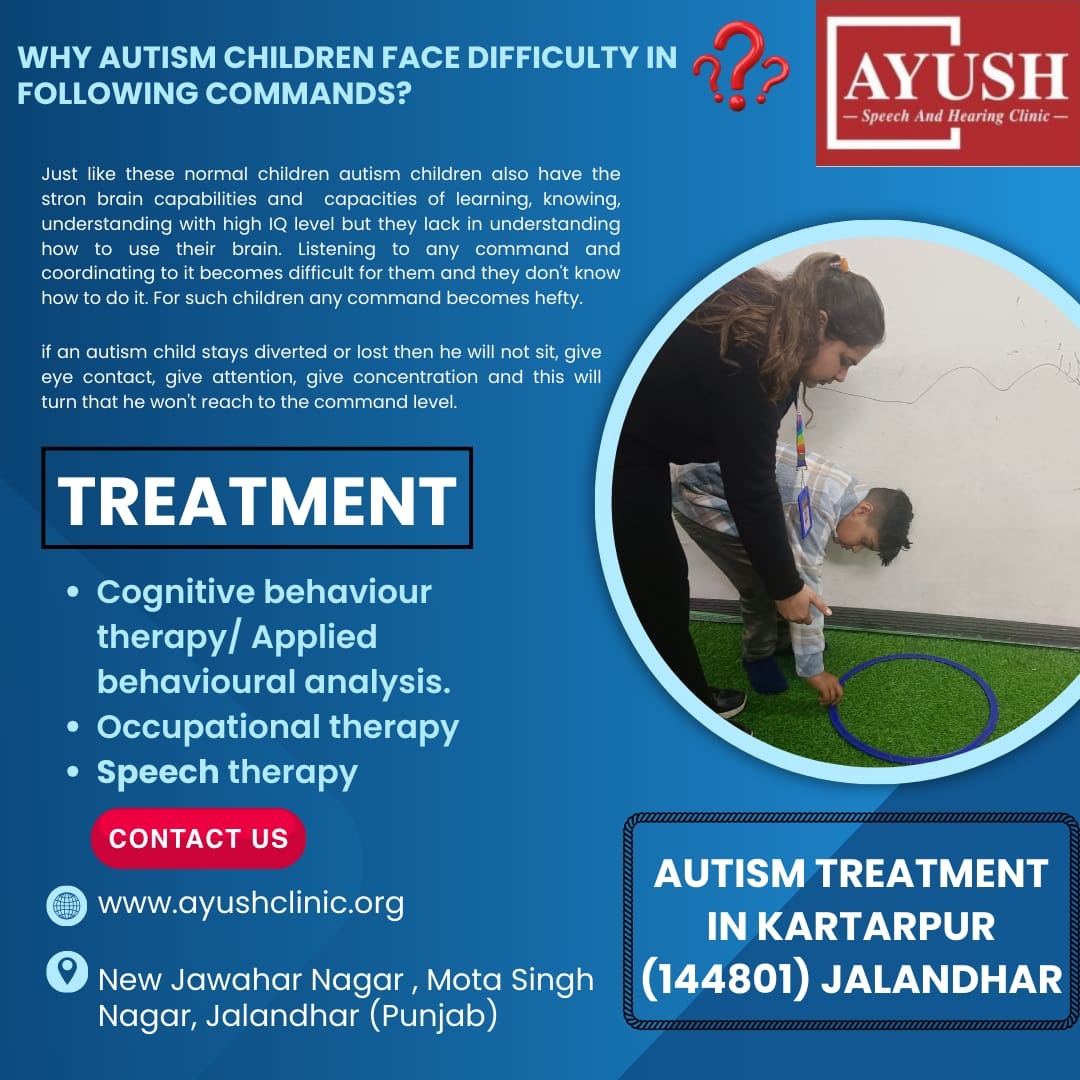
Just like these normal children autism children also have the stron brain capabilities and capacities of learning, knowing, understanding with high IQ level but they lack in understanding how to use their brain. Listening to any command and coordinating to it becomes difficult for them and they don\'t know how to do it. For such children any command becomes hefty.
Now this is not the only reason for children with autism to face difficulty but another reason is that they don\'t have attention, concentration, eye contact and sitting which is the first most important point to be noted as the reason behind.
Normal children tend to have attention, concentration, sitting, eye contact for which they easily follow any command given to them at any age but autism children find it not easy. Normal children never stays diverted or absent minded but autism children takes seconds to go lost or diverted or absent mind.
Now if an autism child stays diverted or lost then he will not sit, give eye contact, give attention, give concentration and this will turn that he won\'t reach to the command level.
Now let\'s understand what do we mean by brain coordination
Human brain have millions and billions of nerves which are connected to all the body organs and brain controls each of these body organs. For example eyes (vision), ears (hearing), nose (smell), mouth + lips + teeth (biting, chewing, eating, talking, blowing), neck (swallowing), hands (touching, holding, )legs ( walk, run, sit, stand, etc)
Now when any task is given to the child then how the brain will understand and send signal to the body part to move and work accordingly and coordinate together.
Now let\'s elaborate all commands with examples:-
1) one word command - come, go, stand, sit, give, take, name calling:
In \'come\' and \' go\' the child has to use the brain and send signal to 3 organs ears (listening to the speaker and command), eyes
(looking at the speaker) and his legs to walk towards the speaker and vice-versa.
In \'give\' and \'take\' the child\'s brain send signal to the ears (Listening to the speaker), eyes (looking at the speaker, hand (to touch
hold and give or take any object asked for) and vice versa.
2) Two words command - give pen, raise hand. In this recognition is also added with action.
3) Three word command - pick glass and plate, sit on chair. In this recognition of 2 objects together is added with action.
4) Four words sentences command - bring apple and eat, open gate and go. Recognition of objects and actions with increasing level.
Just like this there will be more addition of words which will be sentence command with higher level recognition and actions.
Treatment:-
Every problems have solution in this the solution is therapy which are -
1) Cognitive behaviour therapy / applied behavioural analysis.
2) Occupational therapy
3) Speech therapy
Now in these three therapy the first step is to work on their sitting, attention, concentration, and eye contact.
Ones they have adapted these four steps then start with the 1 word command, then ones achieved next go to 2 words command, then 3 words command then increase the level into sentences which contains 4 words 5words 6 words in it. Now with each command try to show them how to do it and then make them do by touching them and holding their hands and legs and slowly point on the objects and then stop touching them and start giving signs with your finger. Ones done stop signing and start verbal commands.
With commands also take care of speech so that it helps the children to understand what the speaker is trying to say.