Autistic Child Feeding Problems | Diet Plan for Autism | Ayush Clinic Punjab
Understand common diet issues in autistic children. Learn about food routines, sensory problems, and healthy meals for ASD. Therapy support is available at 'Ayush Clinic' in Kolkata.
Best diet plan for autistic children with sensory issues
Understanding Feeding Issues in Children with Autism Spectrum Disorder (ASD)
One of the frequent concerns parents have is about their child’s eating habits. Children with autism often face various challenges related to food.
🔄 Repetitive Eating Patterns in Autistic Children
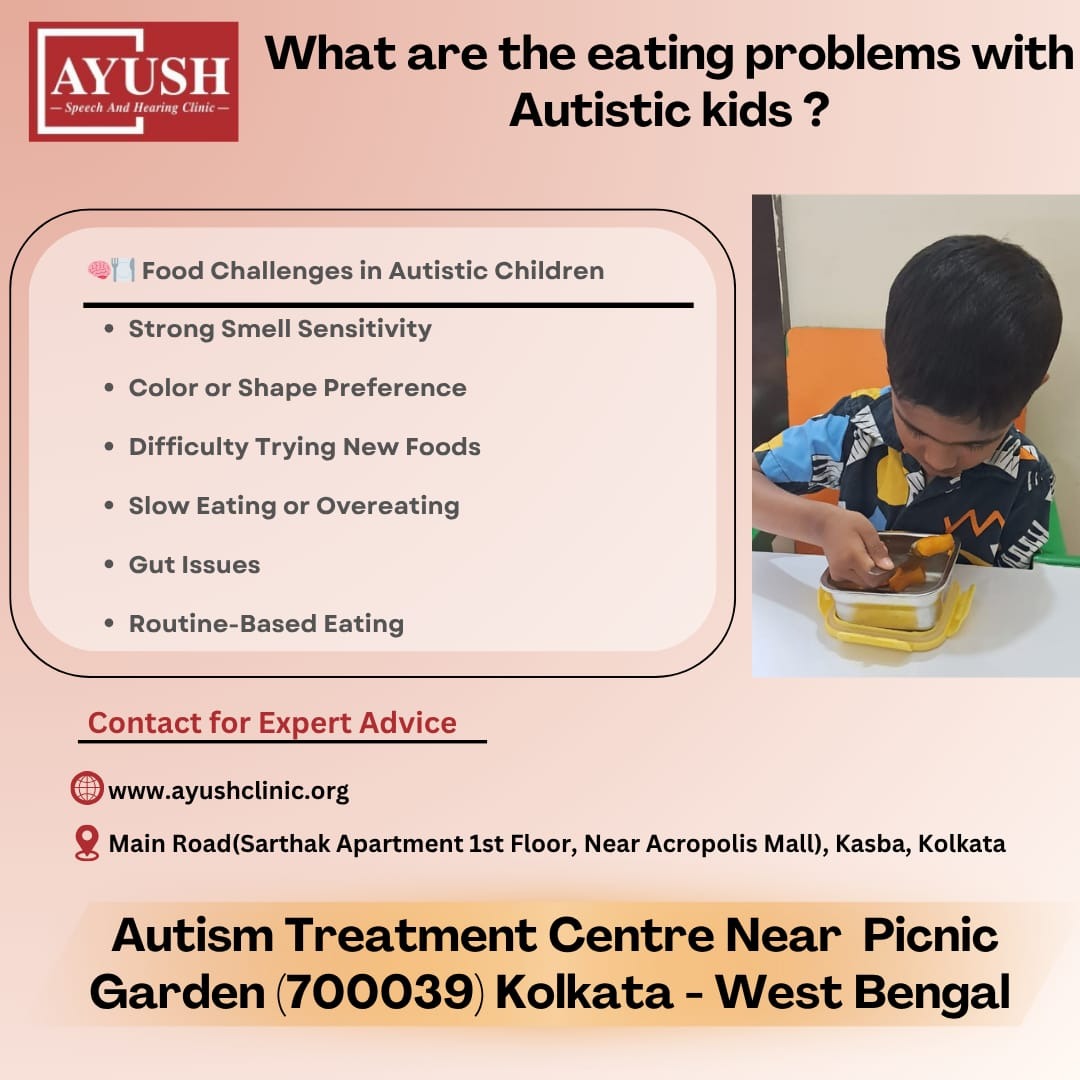
Children with autism prefer eating the same types of food repeatedly. They usually avoid trying new or different foods. They often like packaged foods and are drawn to routines, even preferring to eat in the same place.
🧠 Sensory-Based Food Issues
There are three main types of sensory issues related to food:
- Taste Sensitivity
- Texture Sensitivity
- Smell Sensitivity
How to manage eating problems in autism naturally
These sensitivities can negatively impact the child’s appetite and cause nutritional deficiencies. Sometimes, the sound of the family eating together can also disturb them. Many children prefer their food items not to touch each other and may separate them widely on the plate.
🚫 Common Gastrointestinal Issues
Children with autism often eat very little or don't eat properly. This may lead to:
- Constipation
- Gastric discomfort
- Bloating
- Indigestion
In addition, some children may have food allergies or sensitivities. Due to long-term medication use, they might experience fluctuations in body weight.
✅ What Should Be in an Autistic Child’s Diet?
Like any other child, children with autism should have a balanced and nutritious diet that includes:
Three main meals: Breakfast, lunch, and dinner
- High-fiber foods
- Plenty of water and fluids
- Healthy snacks such as:
- Macaroni
- Dry fruits
- Fresh fruits
- Salads
Food texture sensitivity solutions for autistic toddlers
There is no separate diet for autistic children, but any food allergy must be considered and avoided.
🧠 Therapy Support for Feeding Problems
- Behavioral & Sensory Therapy
- These therapies help children accept new foods slowly.
- Oral Motor Exercises
Oral exercises can help improve chewing and swallowing. Exercises include
- Touch-based stimulation
- Clockwise and counter-clockwise facial exercises
- Thumb-pressure jaw workouts
- Tongue-brushing techniques
3. Introducing Textured Foods
If the child refuses to eat, let them play with the food to familiarize themselves with its texture and taste. Gradually, you can introduce crunchy items like apple slices, pears, watermelon, chips, or cookies.
🥄 Developing Motor Skills for Eating
- Help your child learn how to:
- Hold a spoon
- Bite properly
- Grip a glass
- Drink from a cup
This builds independence and confidence during mealtime.
⏰ Create a Mealtime Routine
- Establish a daily food schedule
- Breakfast in the morning
- Lunch in the afternoon
- Dinner in the evening
Food texture sensitivity solutions for autistic toddlers
Having a consistent routine helps children know what to expect and prevents overeating or under-eating.
Professional help for autism-related food problems in Kolkata