Feeding Issues in Autism
Speech therapy | Feeding Issues in Autism in Kolkata | Expert Therapy Support
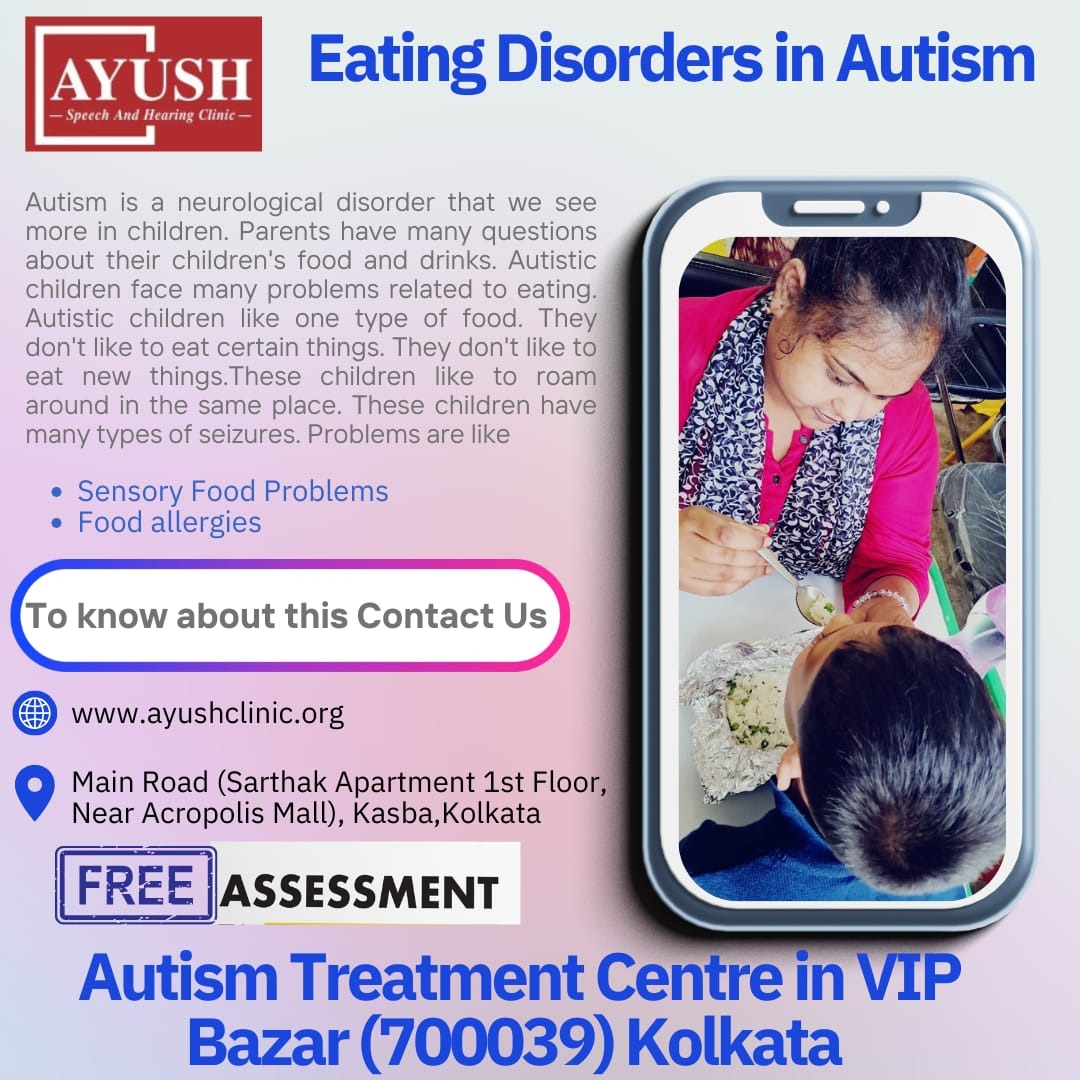
Autism is a neurological disorder that we commonly see in children.
Parents often have many questions about their child's eating and drinking habits. Today, I will try to answer some of those questions.
Children with autism face many feeding-related challenges. They prefer only certain types of food. They tend to dislike or refuse new foods and may not even attempt to try them. These children often show a strong preference for packaged foods and like to roam around the same areas repeatedly. Many of them also experience frequent meltdowns.
Sensory-Based Feeding Challenges
There are some sensory-related issues with food, which fall into three categories:
-
Taste
-
Texture
-
Smell
These problems are common in children and can significantly affect their eating habits, often leading to weakness. During family meals, even sounds can become a disturbance for the child. Some children prefer that the food items on their plate do not touch each other, so they tend to separate foods far apart on their plates.
Children with Autism Often Eat Very Little or Improperly
They may suffer from various stomach issues like:
-
Constipation
-
Gastritis
-
Bloating
-
Indigestion
Food Allergies
Many children may have food allergies, just as they can be allergic to many other things. Since children with autism often take different kinds of medications, they might face eating difficulties, which can lead to weight gain or weight loss.
So, what kind of diet should an autistic child follow?
Their diet should be as balanced as that of any other child.
Oral Motor Exercises
Improving jaw strength, tongue movement, and chewing skills through guided exercises.
Behavioral Feeding Therapy
We use positive reinforcement strategies to expand the child’s food repertoire.
Dietary Planning and Parental Counseling
Creating balanced diets tailored to the child’s preferences and nutritional needs, while coaching parents on consistent home strategies.