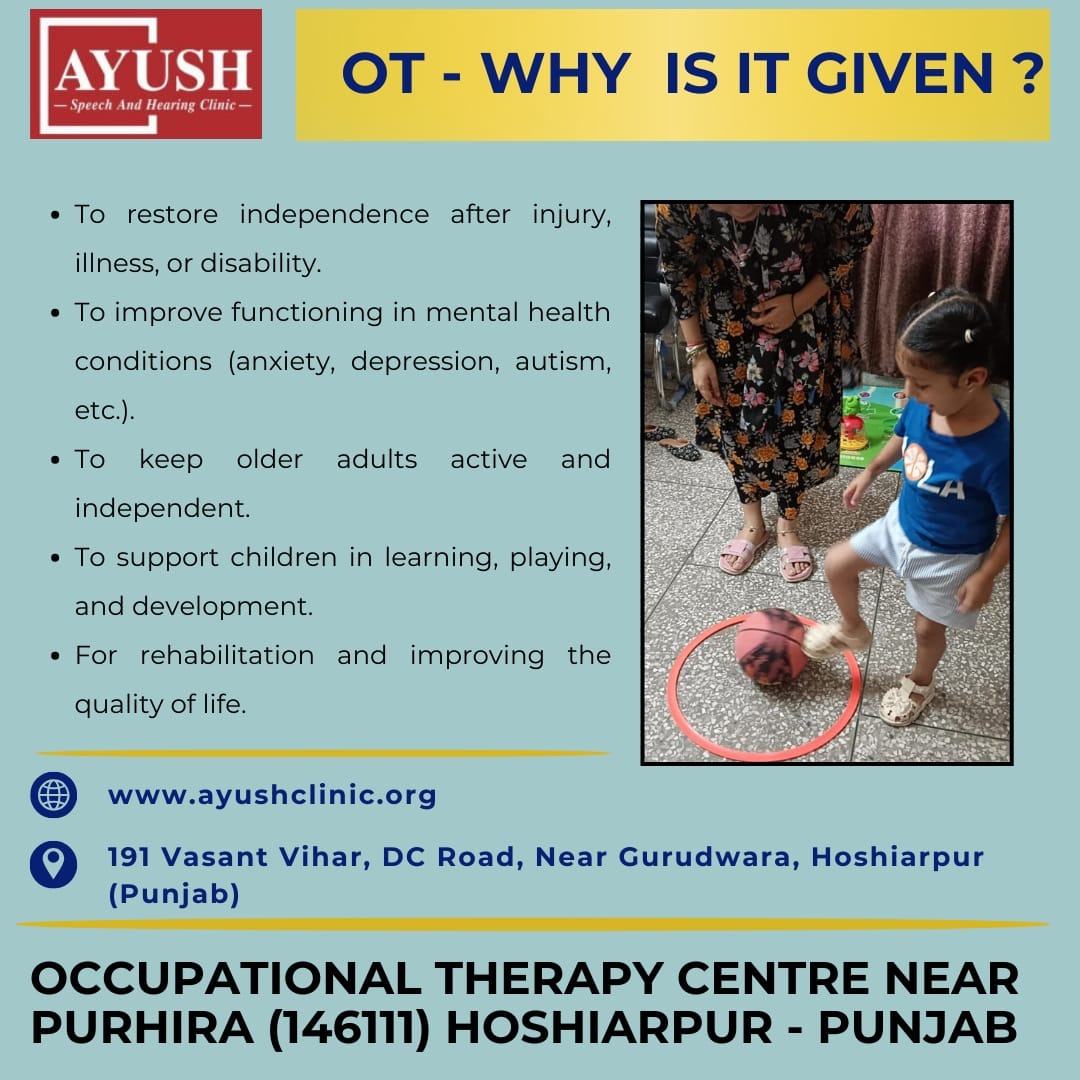
What is Occupational Therapy? Why is it given?
When children have certain disabilities or limited capacity to perform daily tasks, therapy can help improve their behavior and development. Through different types of therapies, children can become more independent and capable of doing daily work.
What is Occupational Therapy?
Occupational Therapy (OT) is a type of therapy that helps individuals or children who face difficulties in performing daily living activities.
Daily living activities include: personal work, social work, educational work, and vocational work. OT focuses on helping children perform these tasks more effectively.
1. Personal Work
Tasks we do from morning to night are called personal work. Examples:
-
Waking up early
-
Eating meals
-
Brushing teeth
-
Cooking
-
Dressing
-
Bathing
-
Washing clothes
-
Combing hair
-
Cleaning the house
-
Wearing shoes
-
Organizing personal belongings
-
Using the toilet
2. Social Work
Social work focuses on social communication and interaction. Children may face difficulties such as:
-
Sitting, standing, or working with others
-
Engaging in group activities
-
Building social-emotional connections
OT helps children improve social-emotional skills, so they can
-
Communicate better
-
Work with others
-
Connect with family and community
3. Educational Work
This includes learning-related activities such as:
-
Reading and writing
-
Performing calculations (addition, subtraction, multiplication)
-
Building learning skills
OT supports children in improving their educational performance, making learning easier and helping them live a better life.
Role of occupational therapy in child development and independence
4. Vocational Work
Vocational work teaches new practical skills to build self-confidence and self-respect. Examples include:
-
Stitching
-
Knitting
-
Candle-making
-
Embroidery
-
Operating a computer
The goal is to make children self-reliant, so they don’t have to depend on others.
Key Focus of Occupational Therapy
-
OT is not just about occupation or earning money.
-
It covers all aspects of a child’s life: social, behavioral, educational, and vocational.
-
With continuous therapy, difficulties in performing daily activities can be reduced or even prevented.
-
The main goal is to develop the child’s capacity and independence in daily living.
Areas Where Occupational Therapy is Provided
-
Hospitals
-
Early Intervention Centers
-
Rehabilitation Centers
-
Special Schools
In these areas, children may receive multiple therapies such as
-
Occupational Therapy
-
Speech Therapy
-
Cognitive Behavioral Therapy (CBT)
-
Applied Behavior Analysis (ABA)