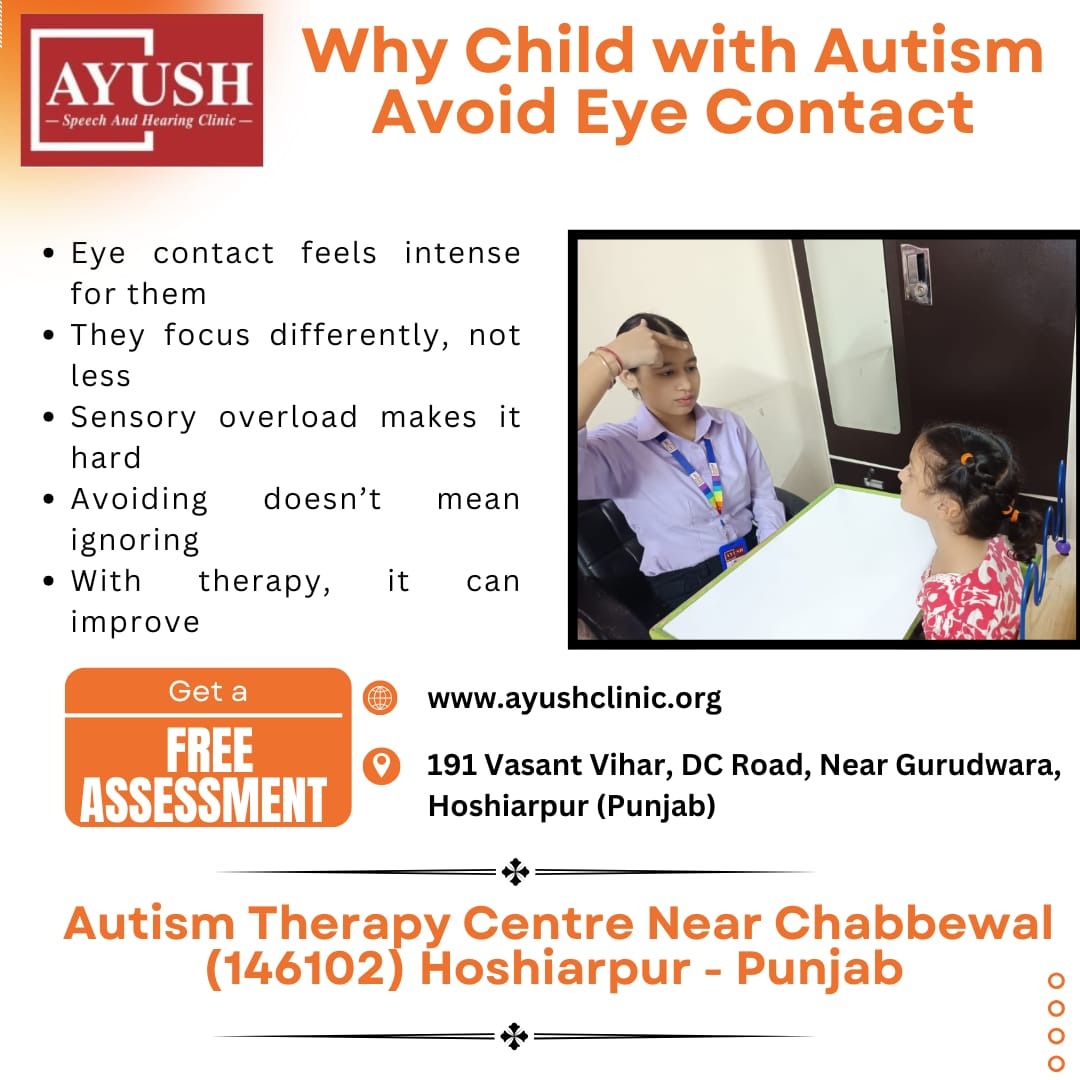
Why Children with Autism Avoid Eye Contact
If there is no eye contact, it often feels like we are being ignored or not heard.
Best Autism Therapy Center in Hoshiarpur
Children with autism usually avoid making eye contact or do it very rarely. However, the level of eye contact varies from child to child.
Parents who are unaware of autism or the lack of eye contact may think their child is not listening, ignoring them, or not paying attention.
But this is not true. Most autistic children struggle with eye contact due to various underlying reasons.
Child Speech and Behavior Therapy in Hoshiarpur
Some children still respond even without direct eye contact, while others do not.
Here are a few possible reasons why children with autism avoid eye contact
Sensory Overload
Children with sensory issues often struggle to focus on a single task. They may look around, play with their hands, or get distracted easily. Because of this, they find it hard to make eye contact.
Sensory Integration Therapy for Autism in Hoshiarpur
Hyperactivity
Children with autism find it challenging to stay focused in one place. They prefer moving around rather than maintaining steady eye contact. If they are forced to look directly, they may become hyper or anxious.
Hyperactivity Treatment for Autistic Children in Hoshiarpur
Stress or Anxiety
Due to stress or anxiety, a child may get lost in their own thoughts. When someone tries to make eye contact during such moments, the child may cry or become hyper. These emotions make it difficult for them to stay calm and engage through eye contact.
Autism Anxiety Management in Hoshiarpur
Difficulty Understanding Gestures and Expressions
Some children cannot interpret facial expressions or gestures. For example, if someone is angry, they may not recognize it because they are not looking at the person’s face. Without eye contact, they cannot read non-verbal cues or emotions.
Autism Social Skills Training in Hoshiarpur
If your child also avoids eye contact, does not respond to their name, seems hyperactive at home, or appears stressed most of the time —
It’s important to identify these signs early and get a professional assessment done. Early intervention can help your child develop better communication and social interaction skills.